



Pluggnb is one of those music terms that makes perfect sense once you hear the sound, but becomes harder to pin down to a single, clean definition.
At its simplest, pluggnb is a melodic internet-rap style that blends the dreamy, bouncy language of plugg with the emotional color of R&B. It often carries soft keys, glossy bells, airy pads, gliding 808s, sparse drums, romantic or wounded vocals, and a sense of space that feels closer to late-night scrolling than club pressure.
But that definition is still too simple.
Pluggnb is not just “R&B over trap drums.” It is not just plugg with prettier chords. It is also not just another type-beat label made to help producers get clicks on YouTube. It is all of those things at once, but the reason the style matters is deeper: pluggnb sits at the point where underground rap, producer culture, SoundCloud history (to me, in a way, a successor of mp3.com from the 90s), R&B harmony, sample-pack economics, and internet music discovery all meet.
That is why pluggnb is important for producers.
Some genres are driven mainly by stars. Pluggnb is different. The artists matter, of course, but the sound travels heavily through producers, beatmakers, loop makers, sample packs, Discord communities, YouTube type beats, BeatStars pages, SoundCloud uploads, and TikTok snippets. It is a style built as much by the people behind the beat as by the person holding the microphone.
For a producer, this makes pluggnb both exciting and dangerous. Exciting because the lane is alive, emotional, searchable, and still flexible. Dangerous because once a sound becomes recognizable, it also becomes crowded. The same bells, pads, 808 slides, and “pluggnb type beat” titles can quickly turn into a sea of similar uploads.
So the real question is not only “What is pluggnb?” The better question is:
What makes pluggnb feel alive instead of generic?
That is where the sound, history, and producer economy all matter.
How Pluggnb Connects to Plugg, R&B, Trap, and SoundCloud Rap
To understand pluggnb, you first need to understand plugg.
Plugg emerged from the underground rap and SoundCloud ecosystems, with a strong connection to Atlanta’s production history. Producers associated with the BeatPluggz wave helped shape a sound that was lighter, dreamier, and more hypnotic than the darker, heavier trap production that many listeners associated with mainstream Atlanta rap.
Classic plugg often uses twinkling keys, simple but sticky melodies, bouncy drums, smooth 808s, and a relaxed pocket. It does not always try to hit you in the face. Sometimes it floats. Sometimes it loops until the mood becomes the hook.
That matters because pluggnb grows from that foundation.
The “plugg” side gives pluggnb its bounce, simplicity, dreamy repetition, and underground rap DNA. The “R&B” side offers softer harmonies, a romantic atmosphere, emotional vocal choices, and a more melodic center. Add modern internet-rap vocals, Auto-Tuned melodies, SoundCloud pacing, and type-beat circulation, and the result becomes something distinct.
Pluggnb is often more emotional than traditional plugg. It can feel more intimate, more late-night, more heartbroken, more glossy, or more weightless. The beat may still knock, but the mood is rarely built solely around aggression. It is built around feeling.
That is why pluggnb overlaps with several lanes at once:
- Plugg, because of the dreamy trap foundation.
- R&B, because of the chords, mood, and vocal sensitivity.
- Trap, because of the 808s, hi-hats, drums, and beat structure.
- SoundCloud rap, because of the internet-native delivery system and underground artist culture.
- Type-beat culture, because producers have helped spread the genre through searchable beat uploads.
This is also why pluggnb can be confusing to outsiders. A listener may hear one track and call it melodic rap. Another may call it plugg. Another may call it R&B-trap. A producer may call it pluggnb because that is the most useful label for finding the sound, selling the beat, or placing the track in the right online lane.
In internet music, genre names are not only descriptions. They are discovery tools.
The Sound of Pluggnb: Dreamy Keys, Airy Melodies, 808s, Sparse Drums, and Vocal Emotion
A strong pluggnb beat usually does not need to be overloaded. In fact, one of the biggest mistakes producers make in this style is adding too much.
The best pluggnb production often works because it leaves room for mood. The beat needs enough movement to keep the bounce alive, but enough space for the vocal, melody, and atmosphere to breathe.
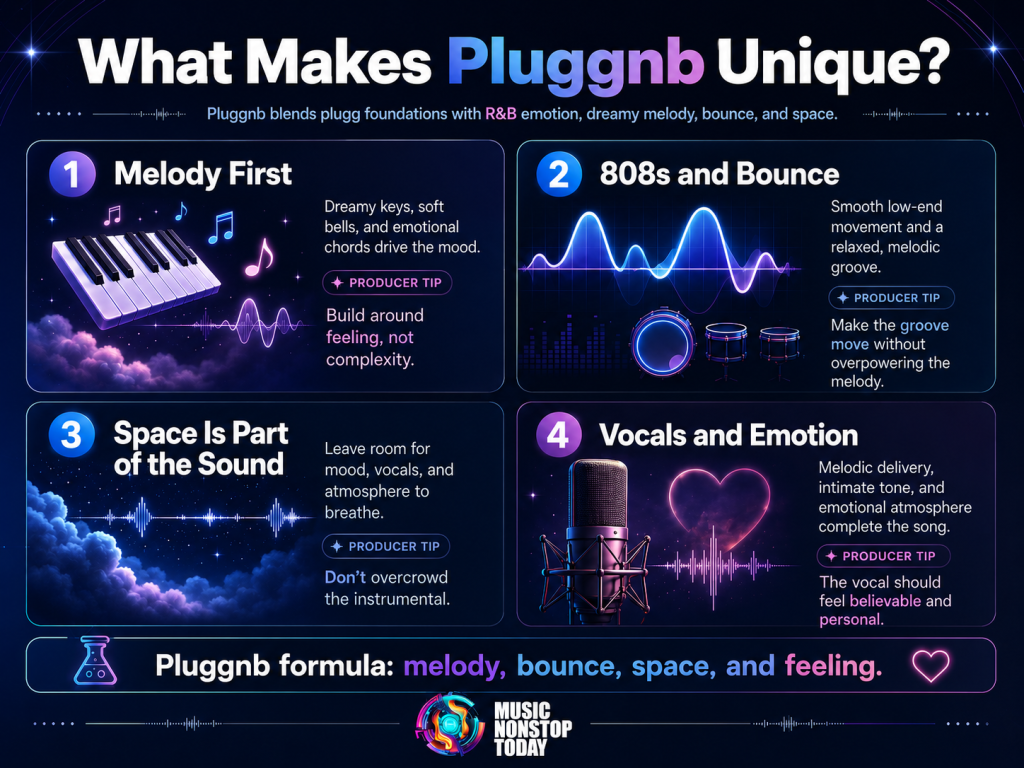
Melody First
In pluggnb, the melody is usually the emotional center.
Producers often reach for bells, electric piano textures, soft synth plucks, dreamy keys, glassy leads, airy pads, and detuned melodic layers. The sound can feel sweet, nostalgic, digital, romantic, or slightly unreal. It does not need to be complicated. A simple loop can work if the tone is strong and the chord movement carries emotion.
The danger is that many producers use similar sounds. A bell melody by itself does not make a beat memorable. A soft pad by itself does not create a feeling. Pluggnb depends on taste: the right voicing, the right bounce, the right sound selection, the right silence between notes.
A great pluggnb loop feels like it already has a story inside it.
808s and Bounce
The 808 in pluggnb usually supports the mood rather than bulldozing over it. It can slide, glide, answer the melody, or create movement under an otherwise simple loop. Some beats use heavier low-end pressure, while others keep the bass smoother and more controlled.
The bounce matters because pluggnb should not feel stiff. Even when the drums are minimal, the rhythm needs a pocket. Hi-hats, claps, snares, open hats, and percussion should support the feeling without turning the track into a generic trap beat.
The best pluggnb drums often feel effortless. That does not mean they are lazy. It means they do not distract from the emotional core.
Space Is Part of the Sound
Pluggnb is not only about what is added. It is also about what is left out.
Too many melodies, counter-melodies, effects, transitions, and drum fills can kill the mood. The vocal needs space. The beat needs air. The listener needs room to sit inside the feeling.
This is especially important for producers who sell beats online. A beat that sounds impressive on its own may still be difficult for an artist to use. A pluggnb instrumental should feel complete enough to attract attention, but open enough for a vocalist to own it.
That balance is hard.
Vocals and Emotion
Pluggnb vocals often sit somewhere between rap and melody. The delivery may be casual, wounded, romantic, numb, bright, or emotionally detached. Auto-Tune and vocal effects can be part of the texture, but they cannot replace performance.
The vocal does not always need big singing. Sometimes the right pocket, tone, and repetition do more than a technically impressive vocal run. A pluggnb song can live or die by whether the artist sounds believable inside the beat.
For producers, this means the beat should invite a vocal mood. If the instrumental already says too much, the artist may have nowhere to go. If it says too little, the song may feel empty.
The best pluggnb production creates a world and leaves a door open.
During the research and learning process, while looking for some hidden games, we found a good 5-minute tutorial on soulful Pluggab beat creation. We recommend you watch the following short video by Geam to get a sense of what we explained in the previous sub-chapters.
Why Pluggnb Is So Important to Producers
Pluggnb has started to rise in listening trends since the spring of 2024. It is also a production trend. That distinction matters.
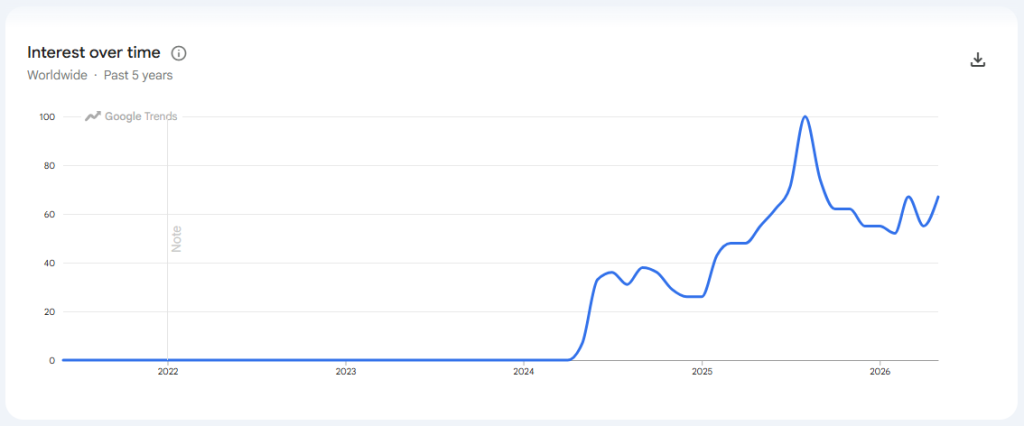
Some genres grow because a few famous artists dominate the charts. Pluggnb has a different kind of momentum. Its growth is closely tied to how producers search for sounds, download samples, upload beats, tag their work, and imitate or mutate online trends.
A producer can discover pluggnb through a sample pack. Another can find it by searching YouTube for “pluggnb type beat.” Another can learn the sound through TikTok remixes, SoundCloud playlists, underground artists, Discord feedback groups, or BeatStars listings. The genre travels through tools and platforms as much as through traditional media.
This makes pluggnb especially interesting for beatmakers. If you are a producer, pluggnb gives you several opportunities:
- You can create beats for artists who want a melodic underground sound.
- You can sell instrumentals through type-beat search.
- You can build sample packs, loops, presets, or drum kits around the aesthetic.
- You can collaborate with vocalists who live in the space between rap and R&B.
- You can create short-form content showing your process.
- You can position yourself as part of a sound that is still evolving.
But there is also a problem.
When a style becomes searchable, it becomes copyable. When it becomes copyable, it becomes crowded. When it becomes crowded, producers need more than a beat upload to stand out.
That is where identity matters.
A pluggnb producer needs to think beyond the instrumental. The producer name, tag, cover art, titles, collaborations, social proof, editorial coverage, and consistency all become part of the brand. The beat is still the foundation, but the beat alone is not always enough to create momentum.
This is why pluggnb producers should pay attention to the content around their music. A serious review, interview, breakdown, or third-party article can help create a trail that exists outside the social feed. It gives the producer something searchable, linkable, and reusable.
That does not guarantee success. Nothing does. But it helps build context.
The Pluggnb Beat Economy: Loops, Sample Packs, Type Beats, BeatStars, and YouTube
To understand pluggnb today, you have to understand the beat economy around it.
The modern producer does not wait for a label to call. Producers upload beats to YouTube, sell leases on BeatStars, post snippets on TikTok, trade loops, buy sample packs, join Discord servers, build drum kits, and use social platforms as storefronts. Pluggnb fits naturally into that world because the sound is recognizable and searchable.
Search matters. If an artist wants that dreamy, melodic, late-night underground rap feeling, they may literally search for “pluggnb type beat.” That search becomes a marketplace.
This is why type-beat culture is so powerful. It gives producers a way to connect their sound to artist demand. But it also creates a trap. If every title, thumbnail, melody, and drum pattern looks and sounds the same, the producer becomes invisible inside the very market they are trying to enter.
A pluggnb type beat must do two things at once:
- It must be familiar enough to be found.
- It must be distinct enough to be remembered.
That is not easy.
Sample Packs and Sound Selection
Sample packs have helped spread pluggnb because they make the sound easier to access. Producers can quickly find loops, drum one-shots, 808s, presets, and textures that fit the genre. This helps new producers learn the style, but it also increases sameness.
If everyone starts with similar sounds, the producer’s decisions become even more important. Which loop do you choose? How do you flip it? Do you change the chord movement? Do you build around it or just drag it into the session? Do the drums actually bounce, or do they simply follow a formula?
Tools are useful. Taste is still the difference.
YouTube and BeatStars
YouTube is one of the main places where type-beat culture becomes visible. Producers use titles, thumbnails, tags, and artist references to reach vocalists. BeatStars and similar marketplaces then turn that attention into leases, exclusives, and catalog income.
For pluggnb producers, the challenge is that “pluggnb type beat” can attract the right audience, but it also places the beat inside a very crowded lane. A producer needs to think about more than ranking for a keyword.
- What is the visual identity?
- What artists fit the beat?
- What emotion does the beat sell?
- What makes the producer recognizable after the beat ends?
- Would someone remember the producer’s name?
- Would a vocalist want to build a whole song around this instrumental?
These questions matter because pluggnb is not only about sound. It is also about positioning.
SoundCloud and Internet Rap Culture
SoundCloud remains part of the cultural language around plugg and pluggnb because it represents a certain kind of underground circulation. It is fast, messy, direct, and artist-driven. Songs can move through reposts, small communities, niche playlists, and social sharing before traditional media notices them.
That internet-native behavior shapes pluggnb. The genre does not need permission to move. A beat can travel as a snippet. A vocal can travel as a loop. A remix can travel before anyone agrees what genre it belongs to.
For producers, that speed is both a gift and a warning. The sound can move quickly, but attention can disappear just as fast.
Why Pluggnb Grew Among Producers
Pluggnb grew among producers because it offers a rare combination: emotional melody, trap rhythm, R&B warmth, internet flexibility, and commercial usability.
A producer can make a pluggnb beat that feels soft but still knocks. A vocalist can sound vulnerable without completely leaving rap. An artist can float between singing and rapping. A beatmaker can use melodic skills without abandoning 808s and drums. A listener can hear something romantic, sad, glossy, or addictive without needing a traditional R&B structure.
That flexibility makes the genre attractive.
Pluggnb also fits how modern music is made. Many producers work from loops, presets, templates, and fast collaboration. Pluggnb rewards strong melodic ideas and mood-building, making it friendly to producers who think in terms of textures and hooks. It can be made in a bedroom, shared in a Discord, uploaded to YouTube, sold through a beat store, and turned into a song by an artist in another country.
That global workflow is part of the sound’s appeal.
But the same accessibility creates the biggest weakness. When the barrier to entry is low, quality control becomes harder. A genre can grow quickly and become generic quickly. The producers who last are usually the ones who develop an identity within the sound rather than merely copying the most visible surface traits.
In pluggnb, the surface traits are easy to imitate: bells, pads, 808 slides, soft melodies, and “type beat” titles.
The deeper traits are harder: mood, pocket, restraint, emotion, vocal space, memorable progression, and taste.
Common Mistakes in Pluggnb Beats and Songs
Because pluggnb is accessible, many producers quickly enter the lane. That is not a bad thing. New producers keep styles alive. But the genre has some common mistakes that can make beats and songs feel unfinished or forgettable.
- Confusing a Bell Melody With a Full Idea
A bell sound can be part of pluggnb, but the choice of sound isn’t the point. If the melody lacks emotional shape, rhythm, and connection to the drums, it may feel like a preset demonstration rather than a foundation for a song. - Overcrowding the Beat
Pluggnb needs space. Too many layers can make the instrumental feel impressive for ten seconds and exhausting for three minutes. If a vocalist cannot find a pocket, the beat may not be ready for a song. - Weak 808 Movement
The 808 does not always need to be wild; it just needs intention. If it simply follows the root notes without groove, tension, or bounce, the beat can feel flat. If it slides too much, it can become distracting. - Generic Drum Programming
Sparse drums are not the same as boring drums. A pluggnb drum pattern can be simple, but the pocket still matters. The timing, hat movement, clap placement, and bounce need to support the melody. - No Vocal Imagination
Some beats sound good as instrumentals but do not suggest a vocal direction. A producer should ask: What kind of artist would sound right here? Is this for a soft melodic hook, a numb rap delivery, a romantic vocal, or a more energetic performance? - Poor Mix Balance
Pluggnb often depends on atmosphere, but atmosphere can turn into mud. Pads, keys, bells, vocals, and effects can fight for the same space. A finished song needs clarity, especially between the vocal and the main melodic elements. - Copying the Aesthetic Without Building Identity
This may be the biggest issue. A producer can make a technically correct pluggnb beat and still sound anonymous. The question is not only “Does this sound like pluggnb?” The question is, “Why would someone remember this producer?”
Why Outside Editorial Feedback Can Help Pluggnb Producers
A producer does not always need validation from a magazine. Let’s be honest about that.
Many producers build careers through direct relationships, placements, social consistency, beat sales, and community reputation. A review will not magically create streams. It will not guarantee sales. It will not make a weak beat strong. It will not replace networking or work ethic.
But a good editorial review can still be useful.
For pluggnb producers, outside feedback can help in three ways.
First, it gives perspective. Producers often hear their own beats too many times. They may stop noticing whether the melody is memorable, whether the arrangement gets repetitive, whether the 808 is too loud and distorted, or whether the song actually feels finished. A serious review can identify what works and what needs improvement.
Second, it creates a third-party context. A written review from an independent music magazine gives a producer something to quote, link to, and reuse. It can live in an EPK (Electronic Press Kit), a BeatStars bio, a website, a social post, a press kit, or a message to artists. It becomes part of the producer’s public footprint.
Third, it helps separate music from pure feed content. Social posts disappear quickly. A review article can remain searchable. It can show up when someone searches the producer name, track title, or genre. That kind of legacy content is not a replacement for promotion, but it can support a producer’s credibility.
The key is honesty.
A useful pluggnb review should not be paid praise. It should not tell every producer they are a genius. It should describe the sound, identify strengths, discuss the mood, comment on the production or songcraft, and place the work in context. If something feels generic, the review should say so respectfully. If the beat has a strong identity, the review should explain why.
That is the kind of editorial feedback that can actually help.
What Music Nonstop Today Will Listen For on Pluggnb
When reviewing pluggnb beats and songs, the most important question is not whether the track checks every genre box. It is whether the music creates a convincing mood and has enough identity to stand apart.
For a beat, the reviewer should listen for:
- Melody and emotional tone
- Sound selection
- Drum bounce
- 808 movement
- Space for vocals
- Arrangement
- Mix clarity
- Replay value
- Distinctiveness
For a finished song, the reviewer should also listen for:
- Vocal performance
- Hook strength
- Relationship between voice and beat
- Lyrics and mood
- Vocal mix
- Structure
- Overall finish
- Artist or producer identity
A pluggnb song does not need to be perfect to be interesting. Some of the genre’s charm comes from rawness, internet energy, and emotional directness. But raw does not mean careless. A track can be rough and still have vision. It can be minimal and still feel complete. It can be simple and still be memorable.
The goal is not to force pluggnb into old industry rules. The goal is to understand what makes the style work on its own terms.
Where to Go Deeper
This article is the starting point for Music Nonstop Today’s pluggnb coverage. To go deeper into the sound, production, history, and producer economy, read the related articles in this series:
- What Makes a Pluggnb Beat Work? The Melodies, Drums, 808s, and Space Behind the Sound
- From Plugg to Pluggnb: How Atlanta, SoundCloud, and R&B Melody Shaped the Sound
- Why Pluggnb Is a Producer-Driven Genre: Type Beats, Sample Packs, and the SoundCloud Economy
- Pluggnb Type Beats: Why the Market Is Crowded and How Producers Can Still Get Heard
- Should Pluggnb Producers Pay for Beat Reviews? What a Good Review Can and Cannot Do
Pluggnb is still moving. That is the point. It is not frozen inside one definition, one city, one artist, or one production trick. It is a sound shaped by underground rap history, R&B emotion, producer tools, internet circulation, and the constant pressure to stand out.
For producers, that makes the genre both a lane and a challenge.
The lane is open. The challenge is becoming recognizable inside it.
Producing pluggnb beats or releasing pluggnb songs? Music Nonstop Today offers editorial-style reviews of selected beats and songs, providing producers with third-party written content they can use for promotion, bios, and long-term search visibility.


