



Behind the virtual electropop artist Nilo Cosmo is French creator Geoffroy Pulizzi (GP), whose single Not Your Ordinary Boy explores individuality and self-acceptance through AI-generated music and vocals. But how much of the finished recording comes from human creativity, and how much is produced by artificial intelligence? For Pulizzi, the process began with a personal idea, developed into AI-assisted lyrics and a detailed musical brief, and ultimately involved choosing one recording from ten AI-generated versions.
In this interview with Music Nonstop Today, Pulizzi takes us inside the making of Not Your Ordinary Boy, explaining how he directed the song’s sound, selected its synthetic vocal performance, and prepared the final recording. He also addresses the limits of his creative control, questions surrounding authorship and transparency, and why he believes human artistic judgment remains essential even when AI generates the music itself.
Music Nonstop Today (MNT): Take us back to the beginning of Not Your Ordinary Boy (released Oct 23, 2026). Before using any AI music-generation tools, what had you already created or imagined? Could you walk us through the main stages that took the song from its initial idea to the finished recording?
Geoffroy Pulizzi (GP): The idea for Not Your Ordinary Boy came to me quite spontaneously. At the time, I kept hearing artists singing about being ordinary, including the French singer Marine with her song Fille Ordinaire. And suddenly, something clicked: why should Nilo be ordinary? He isn’t, and for two very different reasons. First, because he’s a virtual character, fundamentally different from a human performer. But more importantly, because even if he were human, he would proudly embrace everything that makes him unique.
I wanted to turn that difference into a strength, never a weakness. I didn’t just want a song that said, “I’m different.” I wanted to transform that difference into something spectacular. Nilo doesn’t try to fit into the background — he disrupts it! That’s how the idea of a flamboyant electropop anthem was born, built around one instantly memorable declaration: “I’m not your ordinary boy.”
I then developed and finalized the lyrics with the help of AI, before defining the musical direction and moving on to BREV.AI. Neither the lyrics nor the musical prompt changed throughout the ten generations. The first version was already promising, but the third was the one that truly convinced me. I kept its entire musical performance intact, followed by a separate mastering stage.
At a time when I kept hearing artists sing about being ordinary, I wanted Nilo to do exactly the opposite: turn his difference into a strength that could no longer be ignored.
MNT: You have previously discussed the song’s message of individuality and self-acceptance. Rather than revisiting its meaning, could you explain how you translated that message into lyrics? Can you share an example of a line or verse that changed during the writing process, what you changed, and why?
Did AI contribute to the writing or revision of any of the lyrics?
GP: I wanted the lyrics to be a declaration of identity, not a plea for acceptance. Nilo isn’t asking anyone for permission to be different. He owns it, celebrates it, and turns it into something spectacular. That’s why I focused on powerful imagery, contrasts, short lines, and a chorus that would stay with listeners from the very first hearing. “I turn the silence into noise” perfectly captures that intention: transforming what might be perceived as weakness or exclusion into a presence that simply cannot be ignored.
Yes, I used artificial intelligence as a songwriting partner, particularly to work on rhymes, phrasing, and the musical flow of the lyrics. I communicated my ideas, intentions, and the emotions I wanted to convey, then guided the process and selected the final wording that best reflected my vision. I don’t have a specific example of a line that changed during that writing stage to share. What I can say is that once the lyrics were finalized, I didn’t change a single word — not even during the ten musical generations.
AI helped me find the words and the rhymes. But what I wanted to say was something no one else could feel for me.
MNT: How did you communicate your musical vision for Not Your Ordinary Boy to the AI tools? What instructions did you provide regarding genre, mood, instrumentation, tempo, vocal character, or song structure?
If you are comfortable sharing one, could you provide an actual prompt or an excerpt from an artistic brief used during production and explain how it evolved?
GP: For Not Your Ordinary Boy, I wanted flamboyant, energetic, liberating electropop that reflected Nilo’s personality. So I developed a particularly detailed prompt, specifying a tempo of 132 BPM, a blend of electropop, dance-pop, nu-disco, and K-pop, as well as a genuine musical and emotional progression.
Some instructions were very specific, such as “Male vocal: warm, expressive, human, breathy, minimal pitch correction,” because I wanted a warm, natural, expressive male voice. Another was “CHORUS: explosive catchy hook, layered backing vocals, wide synths, strong melody, no EDM drop,” to create a powerful, melodic chorus that listeners would immediately recognize. I also wanted the chorus to begin almost immediately, with more intimate verses, organic-sounding instrumentation, and a gradual build toward a euphoric finale.
This prompt also reflected everything I had learned from my previous releases. I listened carefully to feedback, both positive comments and suggestions for improvement, and used those observations to refine my requirements. I paid particular attention to vocal naturalness, richer arrangements, musical variation, and emotional contrast. All of these instructions were there from the beginning. I never changed the prompt during the ten generations.
I’ve learned that when working with AI, the precision of your words matters enormously. But before you can tell a machine what to create, you first need to know what you want people to feel.
MNT: Looking specifically at the finished recording, how would you distinguish your contribution from that of the AI in creating its melody, harmony, rhythm, instrumentation, and arrangement?
Which musical elements were predetermined by you, which emerged from the technology, and which were developed through successive revisions?
GP: I think it’s important to distinguish between artistic conception and musical realization. For Not Your Ordinary Boy, I imagined the song’s identity, developed the lyrics with AI assistance, and defined my musical intentions: the tempo, genres, desired instrumentation, structure, emotional contrasts, and vocal character.
However, I didn’t compose the melodies note by note, nor did I create the harmonies or instrumental arrangements. Those were generated by artificial intelligence based on my instructions. Each generation offered a different musical interpretation. Nothing was developed through successive rewrites of the prompt: the lyrics and instructions remained exactly the same.
My role was to listen, compare, and select the version that best expressed my artistic vision. But that decision wasn’t simply about musical quality. Every song also needs to belong to Nilo Cosmo’s universe, remain consistent with his previous releases, and reflect the artistic direction I want him to explore at that particular stage of his evolution. I chose the third version and preserved its composition, performance, and arrangements entirely. Only a subsequent mastering process was carried out to refine the sound.
I didn’t write every note of this song. But I chose the version that told the story I wanted the world to hear.
MNT: How was Nilo Cosmo’s singing voice created for this particular song? What degree of control did you have over its tone, pronunciation, phrasing, and emotional expression?
Was the voice based on an existing voice model, a human reference, or another generation method? How do you maintain a recognizable vocal identity across different releases?
GP: Since the early days of Nilo Cosmo, I’ve made a conscious decision to preserve almost the same voice across his songs. The AI tool I use allows me to reuse a vocal identity from one release to another, and that was essential to me. Nilo needed his own signature — a voice people could recognize, connect with, and perhaps even grow attached to.
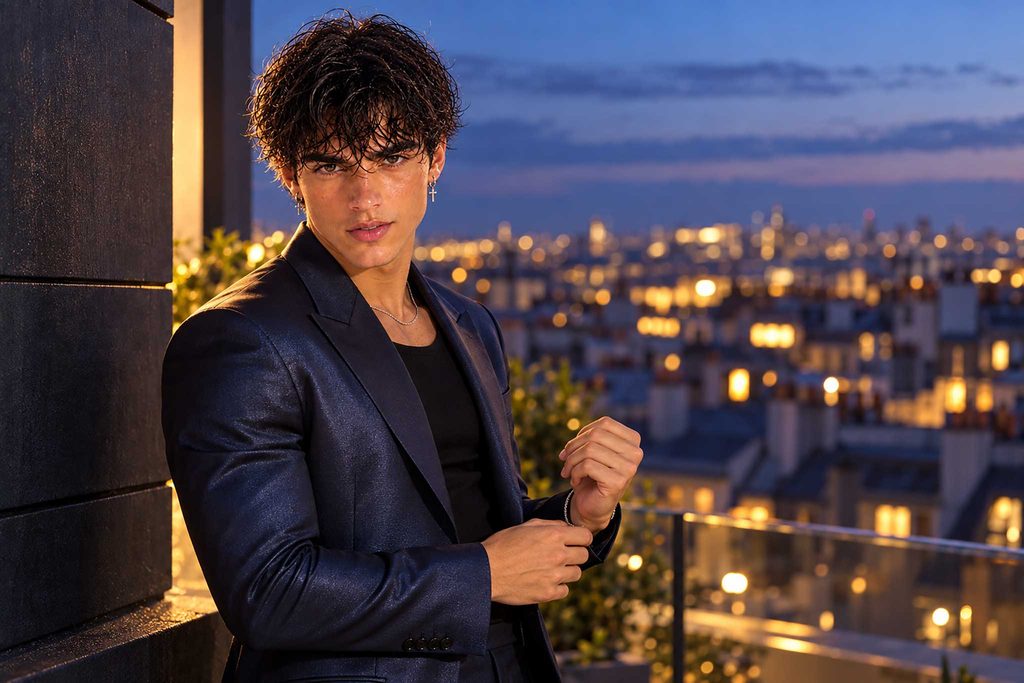
For Not Your Ordinary Boy, I didn’t want to change that identity. I wanted to develop the way he expressed himself. Taking into account feedback on earlier songs, I aimed for more naturalness, warmth, breath, and emotional nuance. I wanted his voice to sound less artificial and more alive, capable of conveying both strength and vulnerability. I can guide these qualities through my instructions, but I cannot control every individual inflection, pronunciation, or emotional detail.
As for the technical origins of his voice, I prefer to be completely transparent: I don’t know precisely how the underlying model works, or whether a particular human voice was used during its training. I therefore can’t claim that any specific singer lent their voice to Nilo. But if such a person exists, I would genuinely love to thank them! What matters most to me is that Nilo maintains a recognizable vocal identity while becoming increasingly expressive.
Nilo may not have vocal cords, but I want his voice to have a soul.
MNT: Could you describe an early AI-generated version of Not Your Ordinary Boy that you rejected? What specifically did not work, and what did you do to obtain a more satisfactory result?
Approximately how many versions did you generate or review, if you kept track?
GP: The first version of Not Your Ordinary Boy was already interesting. It could have worked, but something essential was missing: character, audacity, that sense of strength I wanted Nilo to convey. The vocal performance was too gentle, almost too restrained, and the arrangements didn’t quite deliver the feeling of an anthem celebrating individuality that I had imagined.
Then came the third version. And suddenly, I felt something different: a much more assertive voice, more powerful instrumentation, an energy that finally gave the message its full impact. It was almost exactly what I had heard in my head.
Even so, I continued exploring the possibilities of AI and generated seven additional versions, always using exactly the same lyrics and prompt, just to be certain of my choice. Each had its own characteristics, some of them genuinely interesting, but none gave me the same emotional response. Because beyond technical criteria, there’s something deeply personal — that instinctive feeling when you recognize what you’ve been searching for.
AI gave me ten interpretations. But only one managed to bring to life the Nilo I had been hearing in my mind.
MNT: Once you had a version that captured your artistic intentions, what happened before the song was ready for release?
Did you manually edit the recording, work with separate audio tracks, replace sections, adjust the arrangement, or perform additional mixing and mastering? Which tools and techniques were involved, and did any other people contribute?
GP: Once I had selected the third version, the work wasn’t over. I separated the song into two tracks, one vocal and one instrumental, and then used another AI tool to work on the mastering. I didn’t change the composition, replace any sections, rework the arrangement, or carry out a new mix. My aim was to improve the overall sound while preserving the identity of the original recording.
And this is where, in my opinion, one of the greatest challenges of creating with AI lies: knowing how to communicate with it! The machine isn’t connected to my brain — at least not yet. So I have to translate what I hear, what I feel, and what I imagine into instructions that are as precise as possible. Yet even with a highly detailed prompt, the technology retains an element of interpretation and unpredictability, almost as though it had an artistic sensibility of its own.
My loved ones also contributed at this final stage by listening to different mastering versions and sharing their impressions. Their feedback helped me gain perspective and confirm my decisions. For me, technology doesn’t eliminate artistic work; it shifts part of that work toward expressing intentions, listening critically, and making choices.
AI still can’t read my mind. My greatest challenge is finding the words that will allow it to make my thoughts heard.
MNT: Was there a particular musical or vocal idea for Not Your Ordinary Boy that you could not achieve with the available technology?
How did you respond to that limitation? Did you change your original artistic intention, find a technical workaround, or accept a compromise in the finished recording?
GP: With Not Your Ordinary Boy, I didn’t encounter any significant technical or artistic limitations. The song came together remarkably quickly, and by the third generation, I had found almost exactly the energy, vocal performance, and musical atmosphere I had imagined. I didn’t need to reconsider my original intentions or accept an artistic compromise.
But this experience doesn’t always reflect the reality of creating with AI. With other songs, I’ve sometimes generated thirty or even forty versions, occasionally rewriting the instructions, without ever finding what I was looking for. The lyrics can be perfectly developed, the prompt extremely detailed, and yet nothing happens emotionally. Not a single interpretation gives me that feeling of, “That’s it. That’s the one!”
That’s one of the limitations of this technology. You can guide it, refine your instructions, and try again and again, but you can never guarantee the outcome. Not Your Ordinary Boy was a fortunate exception — an almost immediate meeting between my artistic intention and what the AI produced.
You can ask a machine to generate forty songs. But you can’t command it to move you.
MNT: You are the human creator, while Nilo Cosmo is the virtual artist through whom the music is presented. How does that distinction influence your creative decisions?
Are there things that you feel more comfortable expressing through Nilo than under your own identity? Does the character also impose artistic constraints on you?
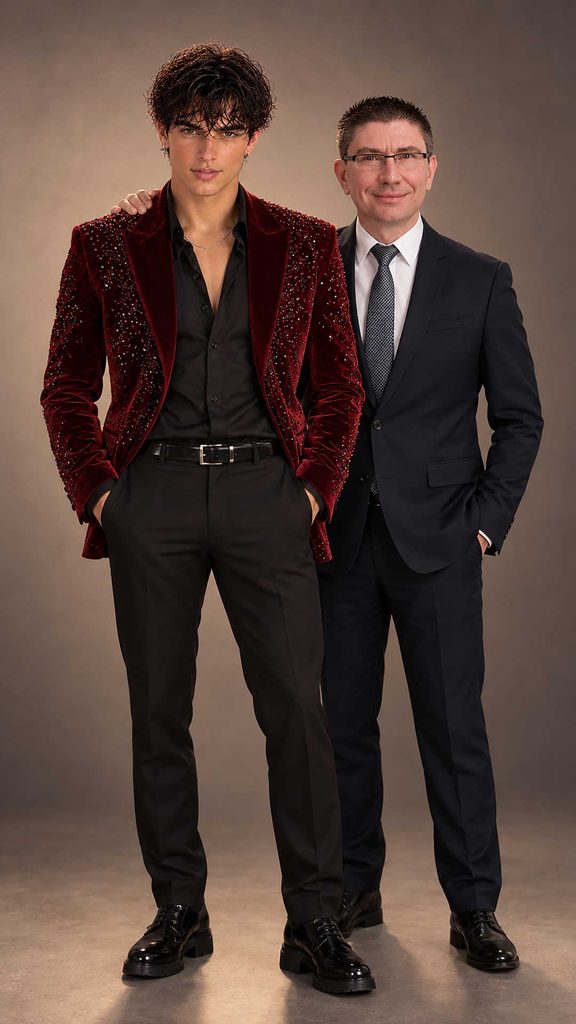
GP: Nilo is me, without being me. He’s a projection of who I am, what I feel, and perhaps even the artist I once wished I could become. He’s an extension of myself, allowing me to express things I might never dare to say under my own identity. Through him, I can finally release the artistic side of me that had always existed but had never truly found its place.
Nilo doesn’t impose any real artistic restrictions on me. I simply try to maintain a coherent universe while allowing him to evolve, surprise people, and even reinvent himself. What I want is to create songs I would have loved to hear myself — songs that speak deeply to me, but that can also touch other people.
Because behind Not Your Ordinary Boy are all those who have ever felt different, misunderstood, or left out. I hope they can find strength, pride, and a way to transform their vulnerabilities into something brighter. That’s the philosophy behind Nilo Cosmo: “I want to make you dance with the things that sometimes break us.”
Our relationship is quite unusual. I imagined him, I give him direction, but AI also introduces an element of unpredictability that sometimes escapes me. It’s a little like watching a child grow up: you guide them, support them, and discover who they’re becoming. Of course, Nilo remains a character I create and direct, but his evolution can still surprise me.
Nilo is the artist I never became, the voice of everything I never dared to say, and perhaps the freest part of who I am.
MNT: How do you define your own role in the creation of Not Your Ordinary Boy? Do you consider yourself primarily a lyricist, songwriter, producer, artistic director, or a combination of these roles?
How is the song officially credited, and what steps have you taken to understand the licensing conditions and commercial usage rights associated with the AI-generated music, vocals, and visuals?
Are there aspects of authorship or ownership that you believe remain unresolved?
GP: Above all, I am the creator of Nilo Cosmo. I imagined him, gave him an identity, a voice, and even a face, created with artificial intelligence. And that face, just like his musical universe, has evolved over time. Nilo has grown, changed, and gradually developed a stronger personality.
I’m a writer, lyricist, artistic director, and, in a sense, a producer. But none of those titles, taken individually, truly describes what I do. Nilo is a little like my virtual child! I brought him into existence, and ever since, I’ve been helping him grow. I guide him, try to improve him, develop his image, his voice, and his music, while accepting the unpredictability AI brings to his performances.
For Not Your Ordinary Boy, I take responsibility for the project’s conception, artistic decisions, and release. The lyrics were developed with AI assistance, while the musical performance was generated by BREV.AI. I therefore distinguish my own creative contributions from those of the technology, without claiming that I personally composed the melodies or arrangements.
From a legal perspective, I use tools whose licenses permit commercial exploitation, and I have taken their terms of use into account. I also want my human creative contributions to be properly recognized and protected through SACEM, the French collective management organization for authors, composers, and music publishers. I haven’t encountered any particular difficulties regarding the commercial exploitation of my songs, although I understand that copyright questions surrounding AI continue to evolve, and that commercial licenses do not automatically establish copyright ownership over every generated element.
Beyond titles, legal definitions, and technology, I remain fully responsible for what I choose to release under the name Nilo Cosmo.
Ultimately, I didn’t simply create a virtual artist. I gave him a face, a voice, and a story. And today, I’m no longer just making him sing — I’m watching him grow.
MNT: What information do you believe listeners should receive about the use of AI before engaging with a virtual artist’s music?
How and where do you currently disclose the respective human and AI contributions to Not Your Ordinary Boy, and do you think the existing platforms provide sufficient ways to communicate those distinctions?
GP: This is probably the question that affects me most deeply, because it reveals what I see as one of the great paradoxes of our time. I fully understand the need for transparency about the use of artificial intelligence, and I comply with my distributor’s disclosure requirements. But what saddens me is that this information can sometimes become more important than the music itself. After all, when we listen to a song, what should our first question be? Was it created with a machine, or did it make us feel something?
I regularly encounter this difficulty with Nilo Cosmo. Some media outlets, playlist curators, and music professionals close their doors as soon as they learn that his music is AI-generated, sometimes without even listening to it. And that’s what hurts the most. Not that someone might dislike my songs — I completely accept that — but that they might reject them without giving them the slightest chance to evoke an emotion.
Yet the history of music is also the history of technological transformation. Synthesizers, sequencers, MIDI, and music production software have profoundly changed the way music is created and performed. I often think of Vangelis and his soundtrack for Chariots of Fire, released in 1981 and awarded the Academy Award for Best Original Score in 1982. Vangelis was, of course, a human composer and performer, but his work demonstrated how electronic instruments could convey universal emotions and achieve extraordinary recognition. Generative AI is certainly a different technological development, raising legitimate questions about copyright, employment, and creativity. I’m not suggesting that all technologies are equivalent. I’m simply saying that our understanding of what constitutes legitimate musical creation has never been fixed.
I’m not claiming that every AI-generated song is good. Some leave me completely indifferent too! But why refuse to listen to those that might actually touch us? Behind Nilo are my ideas, my emotions, my doubts, my decisions, and my deeply human desire to share something meaningful. The artist is virtual, but what I’m trying to express is profoundly human.
I wish platforms and the music industry would do more to support this emerging form of creativity instead of reducing it to a label. Transparency should help people understand how a work was created, not become an automatic reason for exclusion. Platforms could do a better job of distinguishing human contributions — songwriting, artistic conception, direction, and selection — from the elements actually generated by AI. That would be far more informative than a simple label.
I’m not asking for special treatment. I’m simply asking for the opportunity to be heard and judged on what I create. Traditional artists and new creators can coexist, with their differences, talents, and limitations.
I’m not asking anyone to forget that Nilo is a virtual artist created with the help of artificial intelligence. I’m simply asking that, before judging how his voice was made, people take a moment to listen to what it has to say.
MNT: Looking back at the entire creative process behind Not Your Ordinary Boy, which decisions or contributions do you consider most distinctly your own?
If another person had access to the same AI tools, the same lyrics, and the same musical instructions, what would make your creative result different from theirs? What has this experience taught you about the role of a human creator in AI-generated music?
GP: What remains profoundly human in Not Your Ordinary Boy is, first and foremost, what gave birth to it: an idea, a spark, an emotion, and above all, the desire to communicate something meaningful. I imagined this song, decided to turn difference into strength rather than weakness, defined its artistic universe, and chose the interpretation that best expressed what I wanted to say. Artificial intelligence helped me develop the lyrics and generated the music, but it hasn’t lived my life, felt my emotions, or experienced my need to share them.
If someone else used exactly the same lyrics, the same prompt, and the same AI tools, they might obtain a musically different song, because each generation involves an element of unpredictability. But more importantly, they wouldn’t necessarily make the same choices. What moves me deeply might leave someone else completely indifferent. They might have selected the first version, the seventh, or none of the ten. I chose the third because it brought to life the Nilo I had imagined. That decision is inseparable from my sensitivity, my personal journey, and the artistic universe I’ve been building since the beginning.
This experience has taught me that human creativity cannot be reduced to mastering an instrument or a technical skill. It also lies in the ability to imagine, to give meaning to something, to recognize an emotion, and to decide what we want to share with others. I don’t claim to do exactly the same work as a traditional composer, and I have enormous respect for those who devote their lives to mastering an instrument or the art of musical composition. But I believe there are now other ways of giving form to what we carry inside us.
Through Nilo, I’ve discovered that I can finally give a voice to a part of myself that, for so long, had no way of being heard. And if my songs can one day help someone feel less alone, embrace who they are, or simply dance despite their wounds, then I’ll have achieved what I set out to do.
Artificial intelligence gave me the means to make music. But it was my emotions, my story, and my humanity that gave me a reason to make it.


