



Primordial (UK /prɪˈmɔːdɪəl/, US /prɪˈmɔːrdiəl/) means “first created or developed” and “existing from the beginning.” The word comes from Latin primus, “first,” and ordiri, “to begin,” and it entered English in the late 14th century. That sense of origin suits early rock timbres: a grainy, first-take guitar riff can feel as elemental as the beginnings the word describes.
“Primordial” sits with related words that carry different shades of meaning. Primeval points to earliest states, primal names an instinctual drive like an Iggy Pop howl, and primitive suggests underdevelopment as in stripped lo-fi garage grooves. The term appears across fields, from early-Earth chemistry to cosmology, and always refers to a starting condition. At Music Nonstop Today we use “primordial” to describe sounds that act as source material for later rock textures.
Quick summary
- The core idea of “primordial” applied to rock is direct: raw, first-take tones and basic musical elements. Those sounds supply the building blocks that later production and arrangement expand on.
- Delta blues handed rock a vocabulary of unvarnished phrasing: slide bends, vocal push, and pentatonic turns. Musicians borrowed those shapes and reduced them into short, repeatable motifs that function as riffs.
- Jump blues and boogie put rhythm at the front and created the backbeat that pushed songs forward. Guitarists and pianists translated those patterns into concise, percussive figures that powered early rock.
- Classic riffs combine melody and groove into a brief musical statement that can also suggest a tiny story. Listen for repeated shapes, syncopation, and pentatonic hooks to spot primordial elements at work.
- A simple practice routine helps: listen to a Delta blues cut, a 1950s R&B single, and an early distorted rock track. Then transcribe one riff and recreate its tone and rhythm to internalize primordial ideas.
1. Why “primordial” is the right word for rock’s beginnings
Using “primordial” for rock highlights origin and elemental musical materials rather than mere age. Practically, that means listening for tonal grit, short repeating motifs, and rhythmic urgency that later styles built on. Where words like “primal” emphasize instinct or “primitive” suggests roughness, “primordial” points to source material that shapes production and arrangement.
When a slide guitar’s bent note or a first-take vocal becomes a defining gesture rather than an ornament, it reads as primordial. Hearing those gestures alongside later recordings reveals how simple choices, like attack, space, and repetition, hardened into structural elements of rock. For a concise treatment of the word’s linguistic origin, consult the etymology of “primordial”, and for quick synonym distinctions see the Merriam‑Webster thesaurus entry for “primordial”.
2. Delta blues: the guitar language that built riffs
Start with Robert Johnson, Son House, and Charley Patton; their field recordings feel primordial because tone, voice, and rhythm were pared to essentials so every note served the song. Robert Johnson’s “Cross Road Blues” condenses bottleneck phrasing, vocal push, and percussive guitar into a compact lesson in feel, and a few pitched gestures carry heavy narrative weight.
Bent notes, bottleneck slide, pentatonic phrasing, and the 12-bar form became core material for rock through economy of expression. Musicians often reduced longer lines to short, repeatable five-note motifs so riffs could anchor a band arrangement. When acoustic holler met amplification, players like Muddy Waters added sustain and a sharper attack so those motifs could cut through a band mix with new aggression.
3. R&B and the backbeat: grooves that ignited rock’s energy
Jump blues and piano-driven boogie put rhythm in the foreground and gave early rock a forward shove. Left-hand boogie ostinatos create a steady, propulsive pulse, and guitarists translated that low-high pattern into clipped, percussive figures that act like a motor under the song. A boogie bass cycling root, sixth, seventh, and octave can become a guitar hook by emphasizing attack and landing on an octave or fifth for a choppy repeat.
T-Bone Walker and Chuck Berry distilled piano energy into concise guitar economy, using single-note phrasing, double-stops, and stop-time fills to make riffs both melodic and percussive. Small venues, limited PA systems, and aggressive playing often produced natural amp breakup, and producers frequently preserved that live urgency so records sounded compressive and immediate. That raw momentum taps a primordial pull to seize attention quickly, and the next section traces how amplified techniques expanded riff vocabulary into new textures and tonal power.
4. Surf, distortion, and the vocabulary of power
Link Wray’s 1958 instrumental “Rumble” recast what an electric guitar could do in a band context. He deliberately pushed speakers, favored single-note drive, and outlined early power shapes with stacked fifths and octaves, creating a distorted, aggressive tone that later informed punk and heavy rock riffing. The record demonstrates how short, punchy intervals can read as force rather than melody.
Dick Dale paired fast alternate picking with a heavy right-hand attack and Fender reverb to make surf lines percussive and immediate. Reverb, tremolo, and octave doubles moved into mainstream rock as texture rather than decoration, and riff writers used those elements to build hooks that live in atmosphere as much as in pitch. Try palm-muting a distorted single-note line, add a short wet reverb, and emphasize downstrokes for punch. Those techniques later hardened into the riffs of punk and early metal.
5. Anatomy of a classic riff: tracing primordial elements in three songs
Great riffs do three jobs at once: they state a melody, lock the groove, and tell a tiny story. Chuck Berry’s “Johnny B. Goode” combines pentatonic fragments and double-stops with precise rhythmic placement so the guitar operates as the song’s protagonist. That economy, treating the riff as both hook and mini-solo, makes the line feel inevitable rather than decorative.
Cream and Eric Clapton use weight and space as a different approach. On “Sunshine of Your Love” deliberate note choices, heavy pauses, and wide dynamic contrast make each attack count, and silence becomes a structural element that gives the riff gravity. Those gaps make the line feel as much about absence as sound.
Link Wray’s “Rumble” shows how minimal material such as two-note ostinatos, repetition, and tone can carry massive charge, with distortion, attack, and sustain turning a few pitches into narrative. Melodic compression, phrasing with space, and motif economy are building blocks riff writers still return to. The next section explains how to capture those elements in the studio so riffs cut through a full arrangement.
6. A practical primer for artists: use primordial sounds in your recordings
We assembled Music Nonstop Today’s “Primordial Rock” playlist as a listening guide. Queue the ten tracks below and study the element noted for each to hear how raw textures became musical language.
- Robert Johnson — open-string slide phrasing and intimate vocal placement
- Muddy Waters — vocal grit and amp-forward presence
- Chuck Berry — double-stop licks and rhythmic punctuation
- Link Wray — power-chord tone and deliberate speaker abuse
- Dick Dale — percussive picking and sparing reverb
- Elvis Presley — mic proximity and swagger
- The Beach Boys — simple harmony stacked as texture
- Cream — trio dynamics and sharp tone contrast
- Led Zeppelin — riff layering and dynamic arrangement
- Jimi Hendrix — controlled feedback and expressive bends
On the production side, start with close miking and amp bias for natural grit. Place an SM57 or a small condenser two to six inches from the speaker cone, slightly off-axis to tame low-end boom. Aim for amp gain that produces tube bias breakup rather than heavy clipping, use short plate-style reverb at modest levels for sheen, and add tape-emulation or mild fuzz at low drive settings to taste.
For songwriting, craft a short motif and repeat it with small variations, then build call-and-response between voice and guitar to hook listeners. Leave space rather than filling every bar, and lean on pentatonic fragments and small melodic leaps so the riff reads as inevitable.
Before you track:
- Lock a solid tempo.
- Craft a 2–4 bar motif.
- Set amp and pedal settings for character.
- Capture both dry and wet takes.
- Bounce a short two-track and attach a one-paragraph note describing influences before submitting.
Submit demos through Music Nonstop Today’s contributor portal for playlist consideration. “Primordial” names rock’s raw origins because these sounds emphasize source, instinct, and elemental texture. Use the playlist and checklist as practice tools: experiment in the studio, refine what you capture, and share your tracks to show how you translate those roots into new riffs.
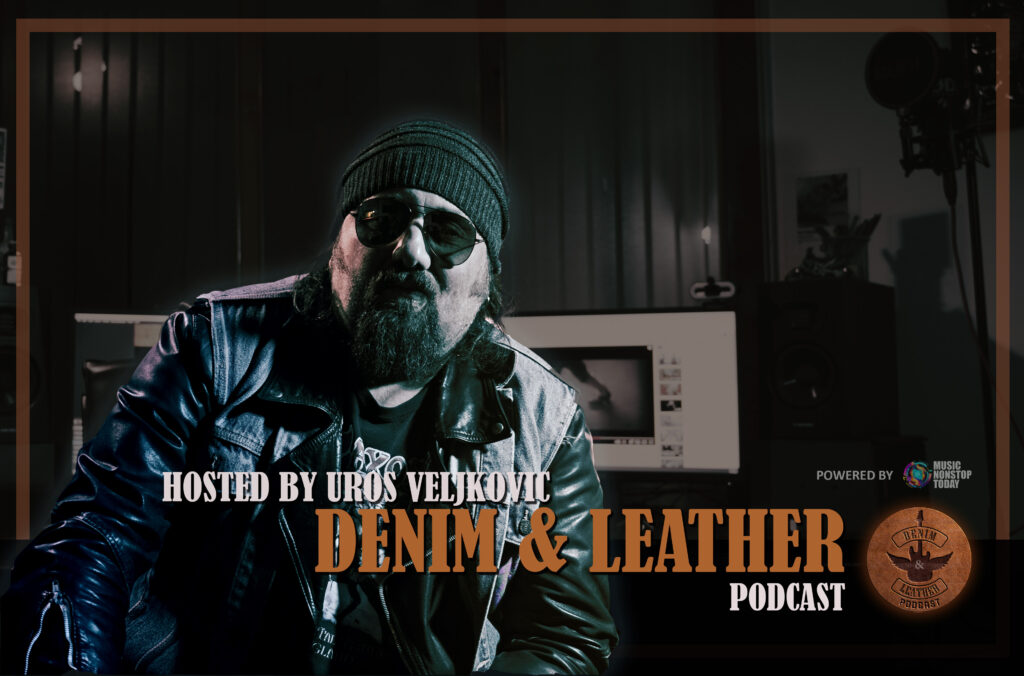
Also, for interviews and practical tone tips that expand on the production ideas above, listen to our Denim And Leather Podcast.
Why primordial roots still shape rock riffs
Calling rock’s beginnings “primordial” fits both the sound and the lineage: Delta blues supplied riff vocabulary while R&B supplied the backbeat that turned those figures into forward motion. From pentatonic hooks to surf texture and distorted power shapes, the same simple choices recur because they communicate directly and immediately. For a deeper dive into subsequent stylistic developments, check our 90s Rock Bands: The Ultimate Handbook.


